What is a spontaneous combustion hay fire?
There is a tragedy that strikes farmers across the United States. It seemingly
comes out of nowhere, but once it starts it is impossible to stop. This
phenomenon is the spontaneous combustion of hay fire. It occurs when wet hay is put
up and is often compounded by stacking. The damp hay generates bacteria and
molds. This chemical reaction produces heat raising the temperature of the bale.
As this chemical reaction continues and the heat increases, the hay becomes
susceptible to inflammation. With the wrong amount of oxygen and high
temperatures, the hay will ignite spontaneously combusting.
If a farmer is unsure about the temperature of a hay bale this can be checked
with a simple candy thermometer. If the temperature of the bale is above 150
degrees Fahrenheit it is hitting dangerous levels. You may be wondering how
common these types of fires are. In the United States in 2021 there were 113
recorded barn fires. Of these fires, less than 14% were categorized as an
obscure cause and only a small percentage of those were spontaneous combustion.
Given these low numbers nationwide, it is a strange occurrence to see three
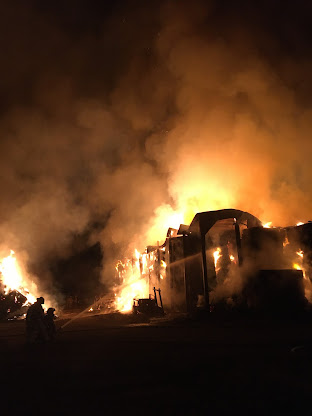
spontaneous combustion fires on Utah farms as we did in the fall of 2021. It
is even more rare to have seen two hay fires ignite in the same week as we did
last Thanksgiving.
These occurrences can likely be traced back to a Utah summer storm and humidity.
On August 18-19 of 2021, there was a rainstorm that hit most of Utah. This storm
was bookended with a month of sunshine and likely seemed like a drop in the
bucket of an otherwise dry summer. An event such as this occurring on cut hay
could cause the kind of moisture that leaves a crop susceptible to mold and
eventually spontaneous combustion. Hay can also absorb moisture from the water
around the bales after it is stacked and put up for the winter.
If wet hay is baled and stacked this can generate heat quicker, but can also
delay a fire due to a lack of oxygen. The typical hay fire occurs within 3-7
days of the hay being put up. If the hay is disturbed as bales are removed,
and the stack exposed to an infusion of oxygen, this can result in an unexpected
fire. After 15 days the temperature of the hay begins to decrease and over 60
days the hay will cool to safe levels. These two Thanksgiving fires are certainly
unusual but could be the result of something as simple as an ignored August rain.

Comments